“Trickle-down economics” and “trickle-down theory” are terms of political rhetoric that refer to the policy of providing tax cuts or other benefits to businesses and rich individuals, in the belief that this will indirectly benefit the broad population. Strangely it is believed that Will Rogers of western movie fame first coined the phrase during the Great Depression.
Money was all appropriated for the top in hopes that it would trickle down to the needy
— Will Rogers
First there was President Ronald Reagan with his supply-side economic which were labeled Reaganomics. This was the first example of the now classic, post-Keynesian Trickle-Down Economics.
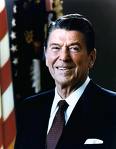 President Ronald Reagan was a strong proponent of Trickle-Down economics, and it was he who brought the term to the notice of the general population.
He believed that reducing taxes on capital gains, corporate income, and higher individual incomes, along with the reduction or elimination of various excise taxes would increase gross domestic product (GD) and that this would benefit the poor.
Despite the clear economics benefits of Reagan’s Trickle-Down Economics, it is generally considered to have been a failed experiment in in macro-economics. While median family income grew and interest rates, inflation, and unemployment fell faster under Reagan than they did immediately before or after his presidency, the income gap between the wealthy and the poor grew and the perceived benefits to the lower income quintiles was far less than expected.
President Reagan forgot to take greed into account.
The wealthy used their new tax breaks and deregulation to increase their wealth greatly, but only caused a tiny fraction of that increase in wealth to trickle down to the average American family. Greed won out.
–~*~–
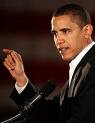 Now we presidential hopeful, Sen. Barack Obama, who wants to increase income taxes on capital gains, corporate income, and higher individual incomes, along with increasing the payroll taxes on both employers and employees in the upper economic quintiles.
He believes this is necessary to provide immediate relief to the poor and middle-class.
Some might choose to describe this as Trickle-Up Economics, others would choose to describe this as Socialism – an intermediate step between Capitalism and Communism. In point of fact – and without the weighted rhetoric of politics – it is Demand-Side Economics as espoused by 20th-century British economist John Maynard Keynes. Sen. Obama’s economic plan is a return to the economic theories of Pres. Jimmy Carter’s administration.
Sen. Obama’s Trickle-Up Economics or Demand-Side Economics is based on the theory that by directly increasing the capital available to the lower income quintiles greater demand will be generated for goods and services across all sectors of the economy. This is turn would generate greater supply and increase gross domestic product (GD) and that this in turn would benefit the poor even more.
Sen. Obama is forgetting to to take greed into account.
The wealthy will do what they can to protect their wealth. Increasing their costs through taxation will lead them to take measures to offset the depredations of their wealth though a variety of methods. None of those methods will benefit America’s poor or middle-class.
- Corporations will likely reduce or adjust domestic workforces by either increased automation or adjustments in full-time to part-time employee number
- Corporations will likely move as much of their business and production facilities overseas as they can manage. In this world of Globalism a dramatic increase in domestic production costs will inevitably lead to an equally dramatic increase in “off shoring” of jobs and production.
- Available capital in the lending markets will likely be reduced since increased income and capital gains taxes will make such business models less lucrative
- General investments – including 401Ks and pension funds – will taper down do to the increased capital gains taxes. Fund administrators would have a much harder time maximizing the growth of such investment portfolios in the wake of greater taxation.
- Corporations will likely increase the basic costs of most goods and services, both to offset their increased tax burdens and to take full advantage of the greater buying power of the poor and middle-class. Inflation never benefits the poor.
Once again, as it did under Pres. Reagan, greed will have one out.
Reagan was an idealist and Obama is an idealist. Both men failed to fully take into account the level of greed in people when they put together their economic policies. The difference between the two lies in the effects of their disparate plans.
Tags: 2008 Elections | Capitalism | Democrats | Economy | Ethics & Morality | Obama | Politics | Reagan | Republicans | Socialism | Society | Taxes
This entry was posted on Sunday, November 2nd, 2008 at 10:12 am and is filed under 2008 Election, Politics.
You can skip to the end and leave a response. Pinging is currently not allowed.
 jonolan on Disney’s Indy Moments: “True! Though I don’t really understand why. They’re ruining their brand and their bottom line.” Aug 30, 07:36


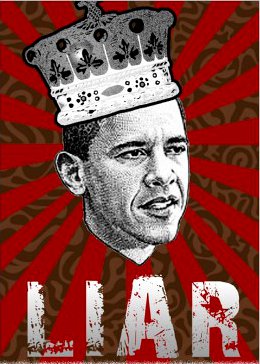 Obama, best and most kindly described as feckless and factless, is really working hard on his shucking and jiving. The boy’s gone from carefully “nuanced” misinformation to outright lies in his bid to keep his job and to keep his wife in the style she believes that she deserves.
 Attempts to curb America’s federal government’s spending addiction go back to the days of President Reagan. He was the first POTUS to make a considered and concerted effort to starve the beast that was, and is even more today, the gluttonous animal that our government had become.
