 President Obama’s chosen nominee to replace retiring Supreme Court Justice John Paul Stevens, Elena Kagan has some “interesting” – read as willfully ignorant but not unexpected – views on the SCOTUS’ role in judging the constitutionality and therefor legality of laws, especially when it comes to Americans’ rights to freedom of speech and expression.
Obama’s Mini-me being his nominee makes more and more sense and it seems she bodes as ill for our nation as Obama so far has.
From CNS News:
Supreme Court nominee Elena Kagan said the high court should be focused on ferreting out improper governmental motives when deciding First Amendment cases, arguing that the government’s reasons for restricting free speech were what mattered most and not necessarily the effect of those restrictions on speech.
Kagan, the solicitor general of the United States under President Obama, expressed that idea in her 1996 article in the University of Chicago Law Review entitled, “Private Speech, Public Purpose: The Role of Governmental Motive in First Amendment Doctrine.”
In her article, Kagan said that examination of the motives of government is the proper approach for the Supreme Court when looking at whether a law violates the First Amendment. While not denying that other concerns, such as the impact of a law, can be taken into account, Kagan argued that governmental motive is “the most important” factor.
Yes, that’s right; Kagan believes that, while the deleterious effects of laws restricting American’s 1st Amendment right to freedom of speech and expression can be taken into account by the Supreme Court, the government’s motives and intent should be the most important factor in their ruling. Ergo, Kagan believes that the government can limit we, the People’s constitutional rights if it’s in a good cause.

Kagan is, like Obama himself, Harvard educated so their shared belief that the ends justify the means is not in the least shocking, given their shared backgrounds.
It was a graduate and later professor at Harvard, Michael Wigglesworth who is attributed with first adding this sentiment to the body of American writings.
The End must justify the Means: He only Sins who Ill intends.
— Rev. Michael Wigglesworth
The Diary of Michael Wigglesworth
From the university’s founding consequentialism and subjectivism have been entrenched in Harvard’s curriculum and all or most of its graduates have been indoctrinated into these philosophies.
Yes, it makes perfect sense that a President such as Obama, who wants to “fundamentally change” America and has some serious issues with dissent would nominate Kagan, who believes that it’s OK to limit freedom of speech in a cause she or the Court approves of, to the SCOTUS. However, this “the ends justify the means when the ends are just” mentality of Kagan’s is nothing but the misborn bastard hybrid of ignoratio elenchi and argumentum ad misericordiam, neither of which has any place in logical argument much less the highest court in America.
It does not matter whether it can be proven that the government had “the best of intentions” when enacting laws that impinge upon Americans’ unalienable rights, nor is their “noble” motives a cause to change or lessen the verdict against them. All that matters is whether or not the law or action in question violates the Constitution of the United States of America.
Elena Kagan has never had the chance to directly inflict the evils and stupidity of her views of the law upon Americans because she has never been a judge. It would be best for America if her lack of experience as a judge continued for the rest of her life.
 Mikko Rantalainen on A Monument To Gen Z: “The official name of this artwork is “Journey of Self Discovery” but I agree that “Monument to the new generation”…” Jul 2, 07:45


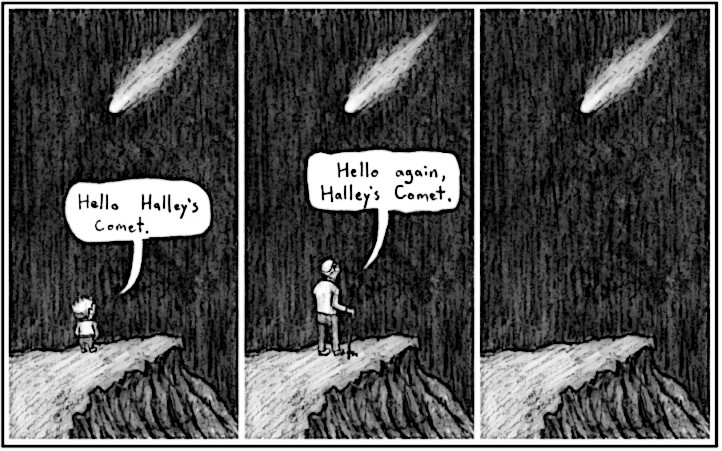
 It is a long recurring theme, the call to have no regrets and/or to live one’s life without regret. Both the young and the middle-aged seeking to find their lost youth herald this idea as a measure of courage and personal growth.
 . Aldous Huxley wrote
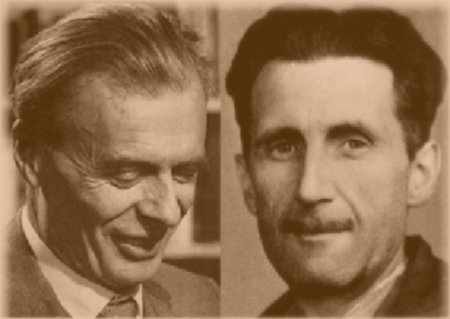
  . Both were dire, dystopian works that speculated upon a horrid future. The two great authors were, however, wildly divergent in their fears and warnings.