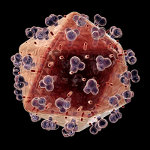
 It’s a pretty good time in the fight against AIDS. A recent study showed that a daily pill, Gilead Science’s Truvada, which already on pharmacy shelves as a HIV treatment could actually help prevent new HIV infections.
The study, published in the New England Journal of Medicine was conducted on 2499 men at 11 sites in six countries: Peru, Ecuador, Brazil, South Africa, Thailand and the United States.
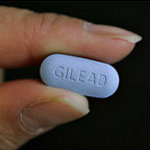 Diligent use of the medication (90%+ daily usage) resulted in a 73% reduction in infection rates over the course of the year-long study. Quite surprisingly, even lackadaisical usage ( 50% daily usage) resulted in a 50% drop in infection rates among the men in the study.
It’s a fact of life, however, that such treatments and potential prophylactics come at a cost.
Associated Press via Yahoo News:
Because Truvada is already on the market, the CDC is rushing to develop guidelines for doctors who want to use it to prevent HIV, and urged people to wait until those are ready.
As a practical matter, price could limit use. The pills cost $5,000 to $14,000 a year in the United States, but roughly $140 a year in some poor countries where they are sold in generic form.
Whether insurers or government health programs should pay for them is one of the tough issues to be sorted out, said Dr. Anthony Fauci, director of the National Institute of Allergy and Infectious Diseases.
So there’s a median cost of $10,000 per annum in America and $140 per annum in the Third World. That’s approximately a 7,150% variance in price between what Americans must pay for drug and what Third Worlders and/or the various institutions helping them in their fight against HIV / AIDS must pay!
 Hellfire! In Uganda where’s there’s a shortage of Truvada, there’s a black market for the drug and, even at black market prices, the cost is only approximately $720 per annum ($2 / dose).
Why is there such a discrepancy and inequality in pricing for this drug? Why is it that Americans with HIV already have to pay such comparatively high prices for Truvada as a treatment?
Big Pharma’s Greed
Is the inequality of costs based upon the greed of the pharmaceutical companies? That’s a seductively easy answer, and one that anyone who studied healthcare costs during the battles over ObamaCare would have to say is not totally without merit.
Yet that would fully explain the degree of inequality in pricing. Given US foreign aid and American based NGOs continued widespread assistance to the Third World’s struggle against HIV /AIDS, one would reasonably expect higher prices than what are being experienced. “Charge all that the market will bear” is an axiom but the market would not, in truth, be the Third World; it would still be America in the form of our federal government and our various charities.
Eating The Rich
An alternative theory would be that the inequality in pricing is based upon some form of ethnoguiltism- and/or oikophobia-driven class warfare which causes our own people to be charged what seems to exorbitant amounts of money in order to subsidize the nearly free care provided to the the Third World.
This is not as easy or pat an answer as corporate greed, but it’s not, in any way shape or form, without merit. We’ve seen this neo-Socialist mindset many times before – in the details of the AGW movement, in ObamaCare itself, in most things billed as “Social Justice,” and in just about anything involving “spreading the wealth.”
Intellectual Miscegenation
A third and, to my mind, more probable hypothesis is, “Why Chose?” I find it likely that the reasons for this disparity between what Americans must pay for treatment vs. what the populace of the Third World must pay is based upon some misborn hybridization – mongrelization really – of the first two possibilities.
Gilead Science, the makers of Truvada, and the other pharmaceutical companies are private sector firms and, hence, profit-driven. Their investors and shareholders are expecting and demanding positive returns on their investments from these companies. When you factor in the broad use of health insurance, it would be – or should be – expected that they would maximize their returns by charging Americans as much as they could manage to do.
At the same time they well might feel the moral and/or – yes, it could be both – public relations need to provide very low-cost medicine for the rest of the world’s poor.
This would cause an intrinsic conflict with their investors and stockholders who want and/or need these companies to focus on profits and market cap so as to maximize the investors’ returns. Charity and profits rarely go hand in hand after all.
Therefor, somebody has to pay for this charity, and who better to pay than the American people? After all, we’re all wealthy and we all owe restitution and reparations to the Third World for that fact – or so those of a common mindset keep claiming.
My Thoughts On The Matter
I care about the reason why there’s such a discrepancy and inequality in the pricing of Truvada only insofar as discovering those reasons would be the first step towards correcting what I see as a problem. I don’t even care that much in particular about Truvada or any other of the antiretroviral drug cocktails used to combat HIV / AIDS; the disease doesn’t, despite it’s being an ongoing cause celebre, affect near as many people – by whole orders of magnitude – than other, less “popular” diseases.
Yet, Truvada’s pricing model is indicative of the entirety of current medical science and technology, especially pharmaceutical science. Americans, rich and poor alike, pay far higher costs than what is charged to the Third World and that just doesn’t seem right.
NOTE: Don’t bother coming here and ranting about how it’s the fault of America’s for-profit health insurance industry; I’ve little tolerance for foolishness and even less for the fools themselves.
The costs of the medicines and procedures are the costs the medicines and procedures. Health insurance, whether it be private, public, or single-payer only spreads out those costs among a pool of payers; it doesn’t positively change the costs themselves.
Like this:
Like Loading...
 Mikko Rantalainen on A Monument To Gen Z: “The official name of this artwork is “Journey of Self Discovery” but I agree that “Monument to the new generation”…” Jul 2, 07:45





 The California Supreme Court